Buying a plot in a township project is a major financial decision. While location, price, and amenities matter, legal and regulatory compliance is what truly protects your investment. This is where a township audit becomes crucial.
At Plotera, we believe informed buyers make safer and smarter property decisions. In this blog, we explain the meaning of a township audit, how the audit process works, and why it is essential before buying plots in a township project in India.
What Is a Township Audit?
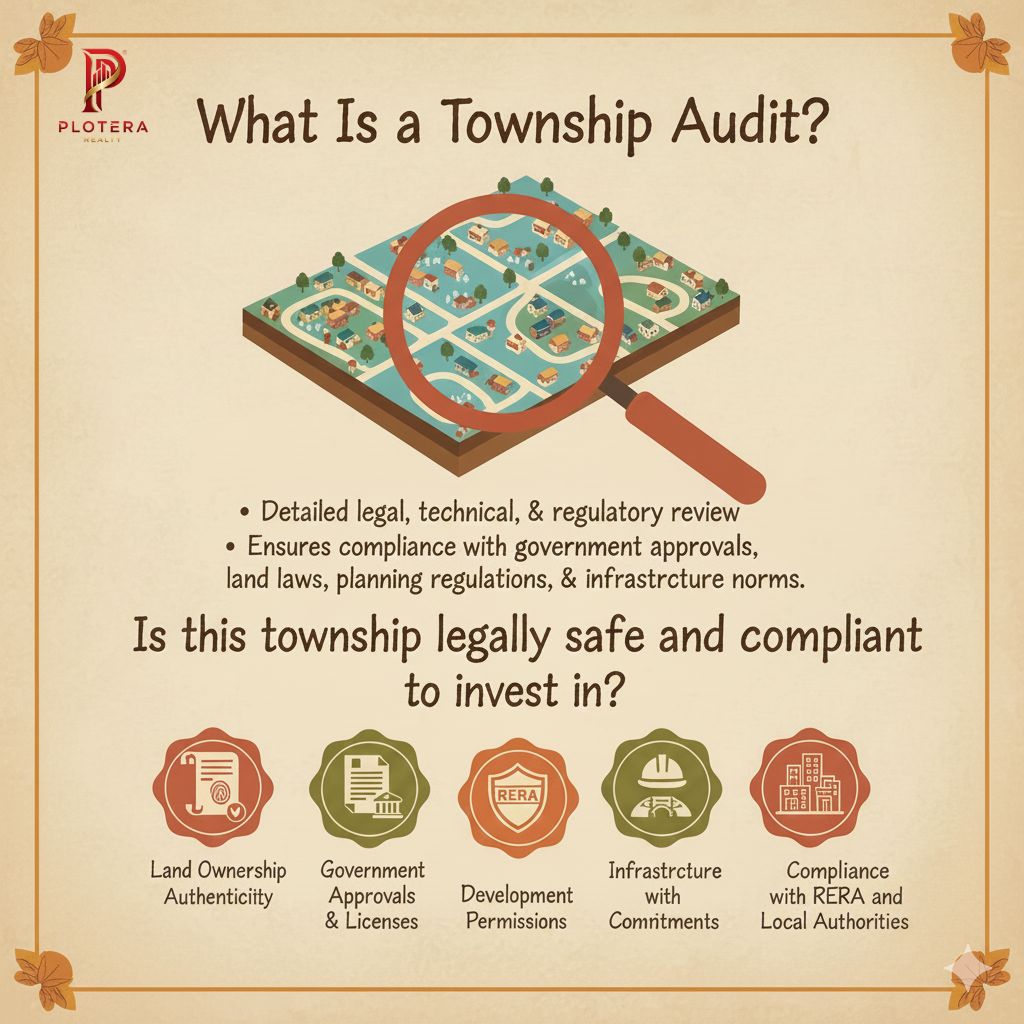
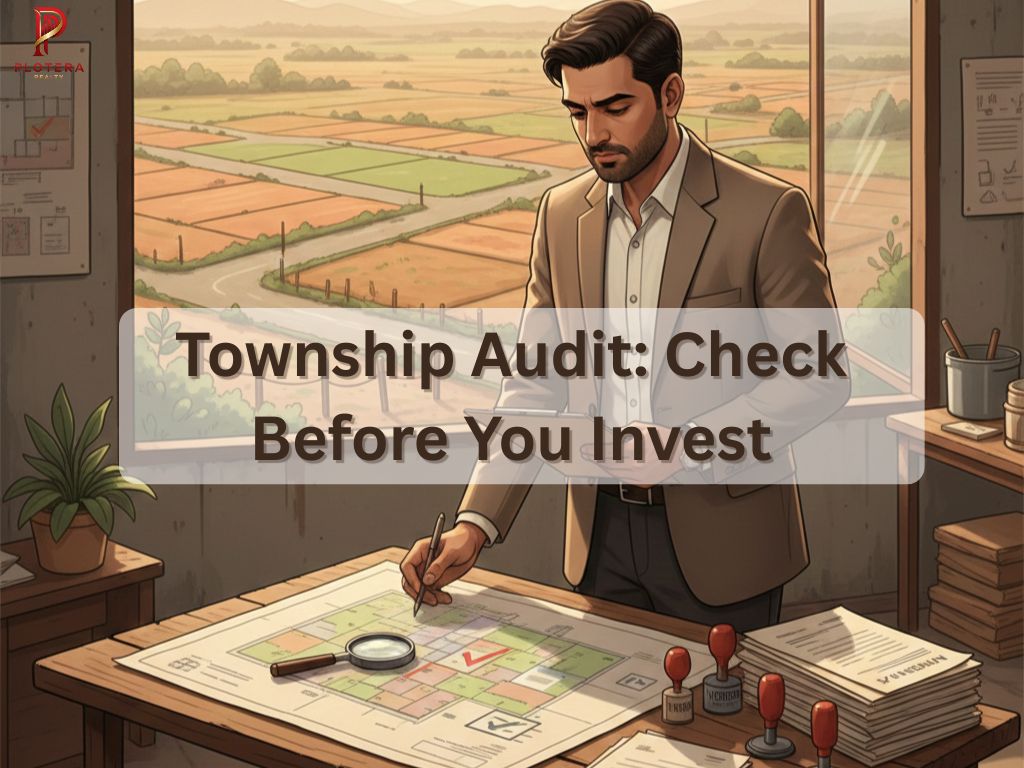
A township audit is a detailed legal, technical, and regulatory review of a township development project. It ensures that the project complies with government approvals, land laws, planning regulations, and infrastructure norms before plots are sold to buyers.
In simple terms, a township audit answers one key question:
“Is this township legally safe and compliant to invest in?”
For plot buyers, a township audit verifies:
Land ownership authenticity
Government approvals and licenses
Development permissions
Infrastructure commitments
Compliance with RERA and local authorities
Why Township legal verification Is Important Before Buying Plots
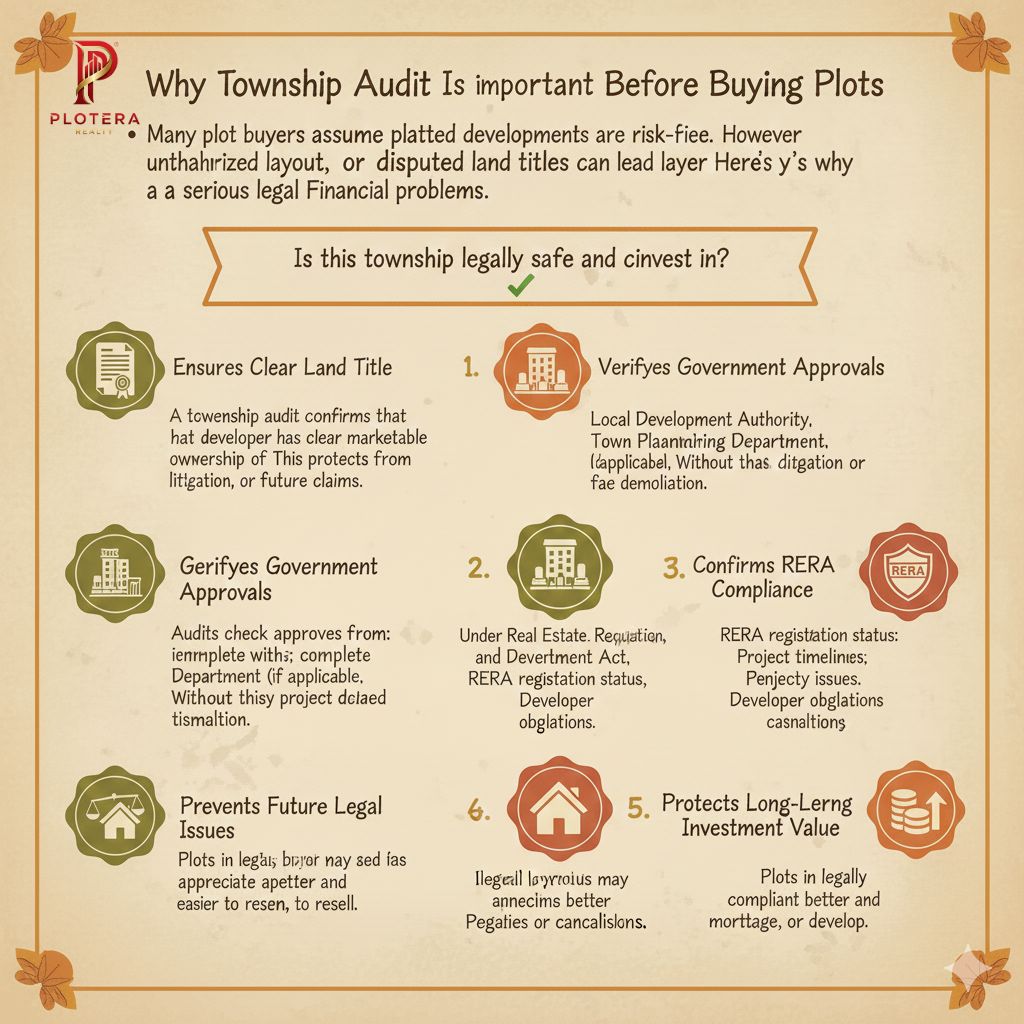
Many plot buyers assume that plotted developments are risk-free. However, unauthorized layouts, incomplete approvals, or disputed land titles can lead to serious legal and financial problems.
Here’s why a township audit is essential:
1. Ensures Clear Land Title
A township approval verification confirms that the developer has clear and marketable ownership of the land. This protects buyers from disputes, litigation, or future claims.
2. Verifies Government Approvals
Audits check approvals from:
Local Development Authority
Town Planning Department
Revenue Department
Environmental bodies (if applicable)
Without these approvals, a project may be declared illegal or face demolition.
3. Confirms RERA Compliance
Under the Real Estate (Regulation and Development) Act (RERA), township projects must be registered. It verifies:
A township legal verification helps buyers avoid such risks entirely.
5. Protects Long-Term Investment Value
Plots in legally compliant townships appreciate better and are easier to resell, mortgage, or develop.
Township Audit Process Explained
A professional township audit follows a structured process to evaluate every aspect of the project.
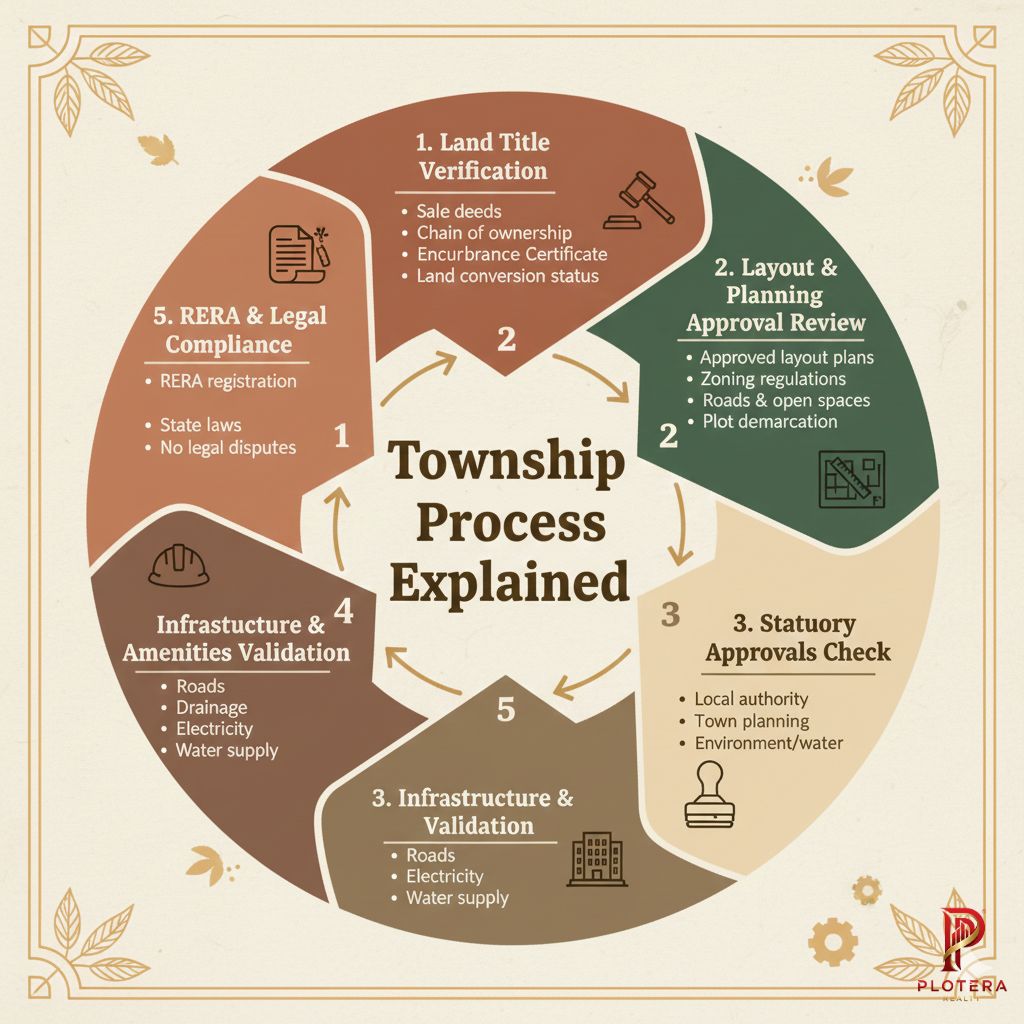
Step 1: Land Title Verification
This includes checking:
Sale deeds and parent documents
Chain of ownership
Encumbrance Certificate (EC)
Land conversion status (Agricultural to Non-Agricultural)
Step 2: Layout & Planning Approval Review
Auditors verify:
Approved layout plans
Zoning regulations
Road widths and open spaces
Plot demarcation compliance
Step 3: Statutory Approvals Check
This involves reviewing permissions from:
Local municipal or development authority
Town planning department
Environment and water authorities (if applicable)
Step 4: Infrastructure & Amenities Validation
The audit confirms whether promised amenities like:
Roads
Drainage
Electricity
Water supply are legally approved and feasible.
Step 5: RERA & Legal Compliance
Ensures:
RERA registration validity
Compliance with state-specific laws
No pending legal disputes or notices
Common Risks of Skipping a Township Audit
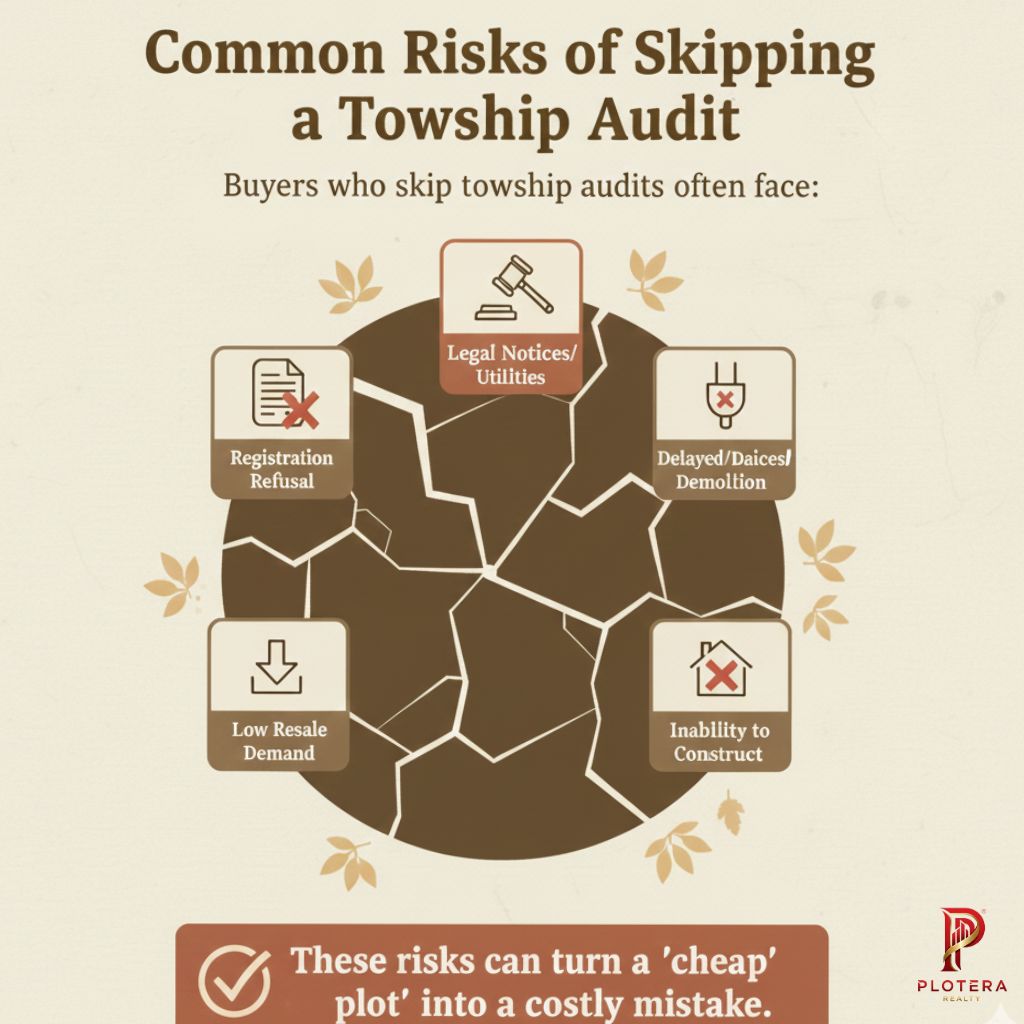
Buyers who skip township audits often face:
Registration refusal by sub-registrar
Delayed or denied utility connections
Inability to construct legally
Low resale demand
Legal notices or demolition orders
These risks can turn a “cheap plot” into a costly mistake.
How Plotera Ensures Safe Township Investments
At Plotera.in, every township project listed on our platform goes through strict due diligence and township audit checks.
We focus on:
Verified land titles
Approved layouts
RERA-compliant projects
Transparent documentation
Buyer-first advisory
Our goal is to help you invest with confidence, clarity, and complete peace of mind.
Township Audit Checklist for Plot Buyers
Before finalizing a plot, ensure the following:
Clear land ownership
Approved layout plan
RERA registration
Local authority approvals
No legal disputes
If any of these are missing, reconsider the investment.
Conclusion
A township audit is not just a legal formality—it is a critical safeguard for your investment. Whether you are buying a residential plot or investing for the future, a proper township audit protects you from fraud, legal issues, and financial loss.
At Plotera, we prioritize legally verified and audited township projects, so you can invest with trust and transparency.
Thinking of buying a plot in a township? Contact Plotera today to get expert guidance on legally verified township projects and make a safe, informed plot investment.